Shortcuts for quickly getting a list of points that can be passed into Curves.define_bezier/1
Usage
    iex> alias Curves.Bezier.Predefined
    iex> Predefined.get_coords(:linear_up_right)
    [{0.0, 0.0}, {1.0, 1.0}]
    iex> [:ease | _] = Predefined.list()
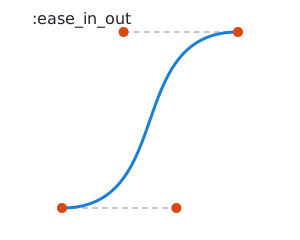
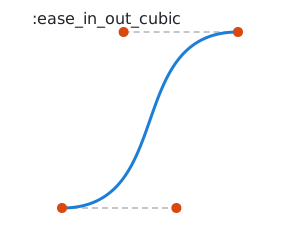
    iex> Predefined.get_coords(:ease_in_out_cubic)
    [{0.0, 0.0}, {0.65, 0.0}, {0.35, 1.0}, {1.0, 1.0}]
The names are the usual easing names (as on easings.net, and in CSS), but the points are this
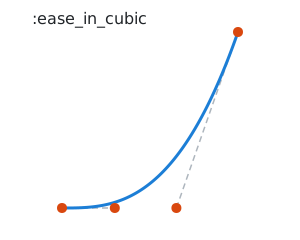
library's own, and some differ from those curves: :ease, :ease_in and :ease_in_cubic are
the same curve, as are :ease_out and :ease_out_cubic, and :ease_in_out and
:ease_in_out_cubic. For an exact CSS timing function, give its points yourself: CSS's ease is
Curves.define_bezier([{0, 0}, {0.25, 0.1}, {0.25, 1}, {1, 1}]), and ease-in-out is
[{0, 0}, {0.42, 0}, {0.58, 1}, {1, 1}].
Gallery
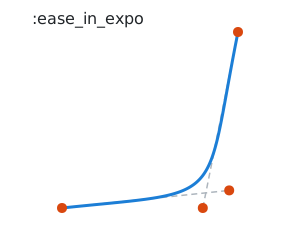
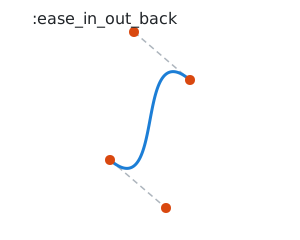
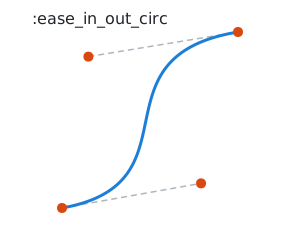
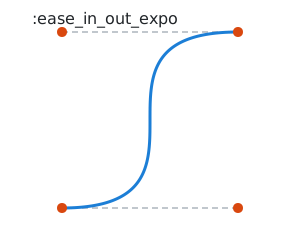
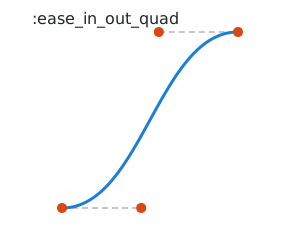
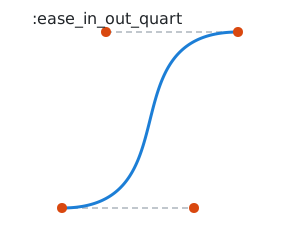
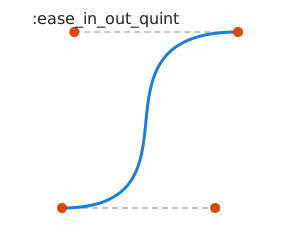
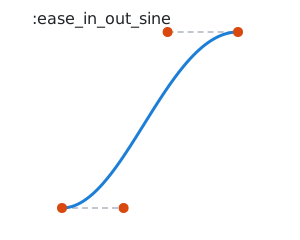
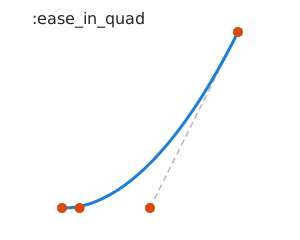
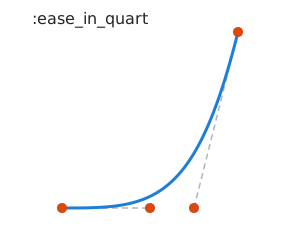
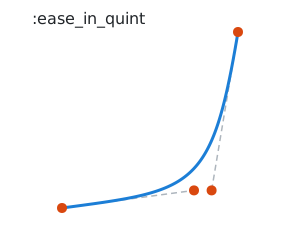
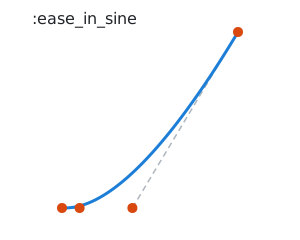
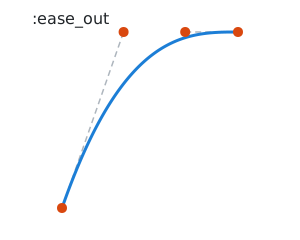
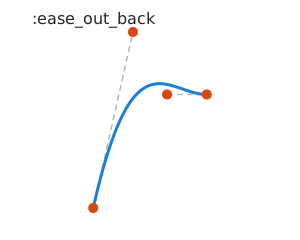
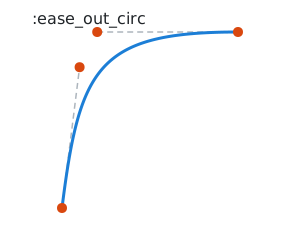
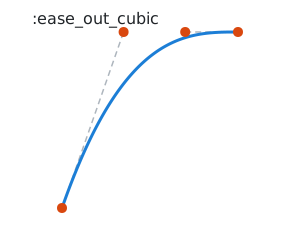
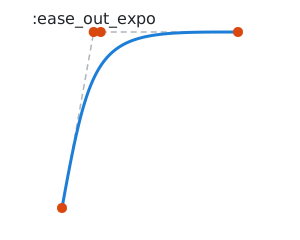
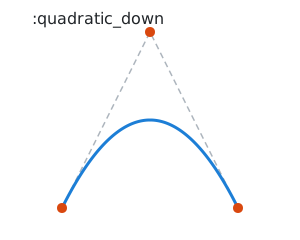
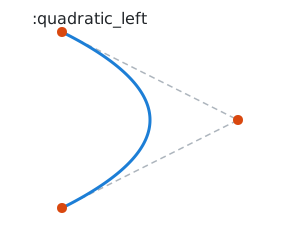
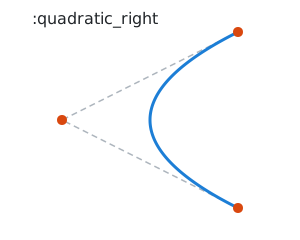
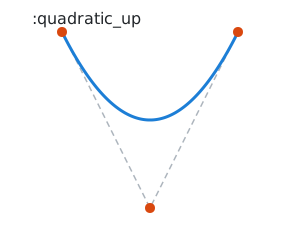
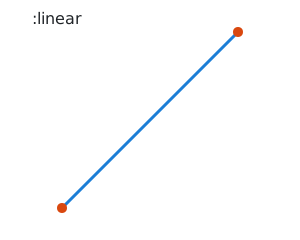
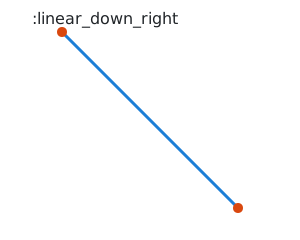
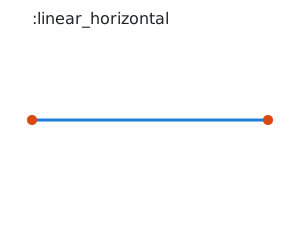
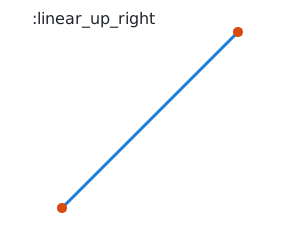
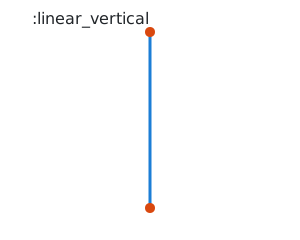
Each picture shows the curve in blue and the points that shape it in orange.
Cubic
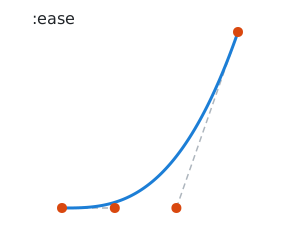 | 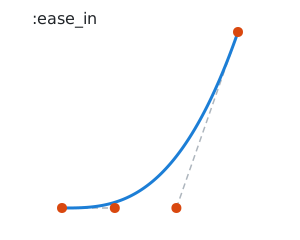 | 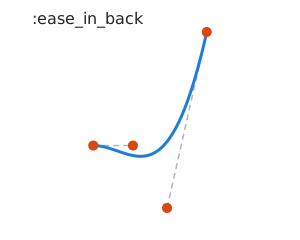 |
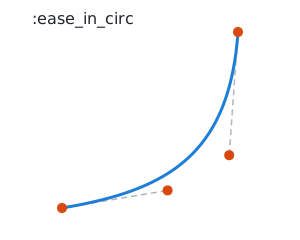 |  |  |
 |  |  |
 |  |  |
 |  |  |
 |  |  |
 |  |  |
 |  |  |
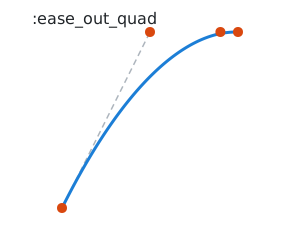 | 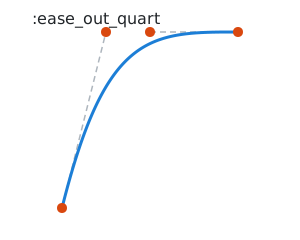 | 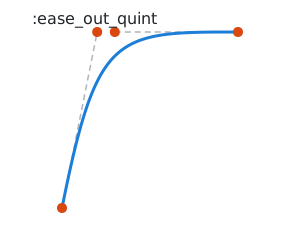 |
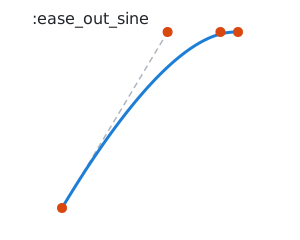 |
Quadratic
 |  |  |
 |
Linear
 |  |  |
 |  |
Summary
Functions
Return a map with details about a specific curve.
Return the list of {x, y} points for a predefined curve. A name that isn't one raises an ArgumentError.
Return a list of all keys that can be used with get_coords/1
Return a list of all keys, within a given curve order, that can be used with get_coords/1
(linear = 1, quadratic = 2, cubic = 3)
Return details/1 for every predefined curve, sorted by key.
Types
@type curve_key() :: atom()
Cubic
:ease, :ease_in, :ease_out, :ease_in_out, :ease_in_back, :ease_in_circ, :ease_in_cubic, :ease_in_expo, :ease_in_quad, :ease_in_quart, :ease_in_quint, :ease_in_sine, :ease_out_back, :ease_out_circ, :ease_out_cubic, :ease_out_expo, :ease_out_quad, :ease_out_quart, :ease_out_quint, :ease_out_sine, :ease_in_out_back, :ease_in_out_circ, :ease_in_out_cubic, :ease_in_out_expo, :ease_in_out_quad, :ease_in_out_quart, :ease_in_out_quint, :ease_in_out_sine
Quadratic
:quadratic_up, :quadratic_down, :quadratic_left, :quadratic_right
Linear
:linear, :linear_up_right, :linear_down_right, :linear_horizontal, :linear_vertical
@type curve_keys() :: [curve_key()]
A list of curve keys
@type curve_type_info() :: %{
  order: Curves.Types.order(),
  key: curve_key(),
  points: Curves.Types.point_list()
}
A map of useful info about a predefined curve.
@type curve_type_infos() :: [curve_type_info()]
A list of curve type info
Functions
@spec details(curve_key()) :: curve_type_info()
Return a map with details about a specific curve.
Examples
iex> Curves.Bezier.Predefined.details(:linear_up_right)
%{key: :linear_up_right, order: 1, points: [{0.0, 0.0}, {1.0, 1.0}]}@spec get_coords(curve_key()) :: Curves.Types.point_list()
Return the list of {x, y} points for a predefined curve. A name that isn't one raises an ArgumentError.
Examples
iex> Curves.Bezier.Predefined.get_coords(:linear_up_right)
[{0.0, 0.0}, {1.0, 1.0}]
iex> Curves.Bezier.Predefined.get_coords(:nope)
** (ArgumentError) unknown predefined curve: :nope. See Curves.Bezier.Predefined.list/0 for the names@spec list() :: curve_keys()
Return a list of all keys that can be used with get_coords/1
Examples
iex> [:ease | _] = Curves.Bezier.Predefined.list()@spec list(Curves.Types.order() | :linear | :quad | :cubic) :: curve_keys()
Return a list of all keys, within a given curve order, that can be used with get_coords/1
(linear = 1, quadratic = 2, cubic = 3)
alternately, pass in one of :linear, :quad, :cubic.
Examples
iex> [:linear | _] = Curves.Bezier.Predefined.list(1)
iex> [:quadratic_down | _] = Curves.Bezier.Predefined.list(2)
iex> Curves.Bezier.Predefined.list(:cubic) == Curves.Bezier.Predefined.list(3)
true
iex> Curves.Bezier.Predefined.list(:linear) == Curves.Bezier.Predefined.list(1)
true
iex> Curves.Bezier.Predefined.list(:quad) == Curves.Bezier.Predefined.list(2)
true@spec list_details() :: [curve_type_info()]
Return details/1 for every predefined curve, sorted by key.
Examples
iex> [first | _] = Curves.Bezier.Predefined.list_details()
iex> first
%{key: :ease, order: 3, points: [{0.0, 0.0}, {0.3, 0.0}, {0.65, 0.0}, {1.0, 1.0}]}